The Impact of Photos on the World
Photographs can have a major and long-lasting impact on someone individually and on the world. There are reasons such as to bring people together or to make a generalized message. Altogether photographs do have a lasting impact on the world which can be shown in different ways.
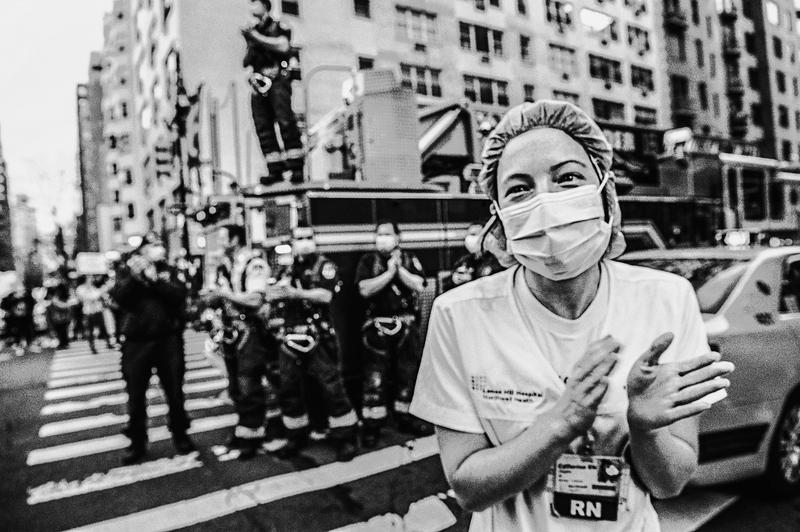
The photograph depicted above has made a personal impact on myself for many reasons with one being because of the career field being shown. My career goal is to be a registered nurse, and I was instantly drawn to what is happening in the picture. This shows the importance of what it was and still is like during COVID for nurses, doctors and other first responders. In the article Ferguson's Citizen Journalists Revealed the Value of an Undeniable Video Dan Gillmor states, "among other uses, documentation and dissemination is helping professional and citizen journalists alike bring more clarity to events like those in Ferguson." This shows how even though the article is specifically talking about a tragic event that happened in Ferguson with cops killing a young black man; the statement still can be applied to this image by showing how dissemination is still needed to bring clarity to events like with healthcare.
Photographs can change history and make it better while going through such a tragic pandemic like in the photo. In the video Photograph of Boris Yeltsin Dancing Jeremy Nicholl states, "sometimes a great photo can change the course of history." Even though the world knew what was happening while COVID was going on, not everybody knew the obstacles first responders had to go through to maintain safety measures. Seeing this photo has shown me that even in the face of a problem, still trying my hardest to keep people safe is a priority and the photojournalist who took this image portrayed that even to the rest of the world.

The image depicted above demonstrates how photographs can change the world. Thomas Hoepker portrays the idea to the world that 9/11 was a tragic event that happened, and like the group of friends are doing; nobody could do anything but sadly watch. In the article Censorship of War Casualties in the US Ted Rall states, "according to Professor Gail Buckland, who studies and teaches photo history at Cooper Union in New York, far more photos of dead US soldiers appeared in newspapers during the 1861-65 Civil War than since 2001." Even though the point of that article was censorship about war and war related topics it still can be thought about with other tragic events like in this photo with 9/11. The point about more dead bodies being shown during the Civil War than in 2001 which is the year 9/11 happened goes to show how strong censorship is. This makes a good point on how photographs can change the world even while being censored because it still sends a meaningful message to people.
Photojournalistic images have a strong impact on society whether not being censored or only to a certain extent. In the video Do Photographs Change the World, Professor Nordell states "you often hear a photograph is worth a thousand words." I believe this to be true because a photo tells a story without having to explain in words but instead incorporating critical thinking and imagination while looking at images. When a photo becomes censored it can be seen as protecting people from photos that are too graphic; but on the opposite side of the argument, it does not allow the audience to get the full story. But ultimately photographs do change the world because it allows an audience to get the full meaning of history without having to use words while still making an impact.


Comments
Post a Comment